
Explicit Strategy Instruction
I had the opportunity to teach a Problem String in 4th grade recently and it made me think of Explicit Strategy Instruction and our 2022 MN Math Standards.
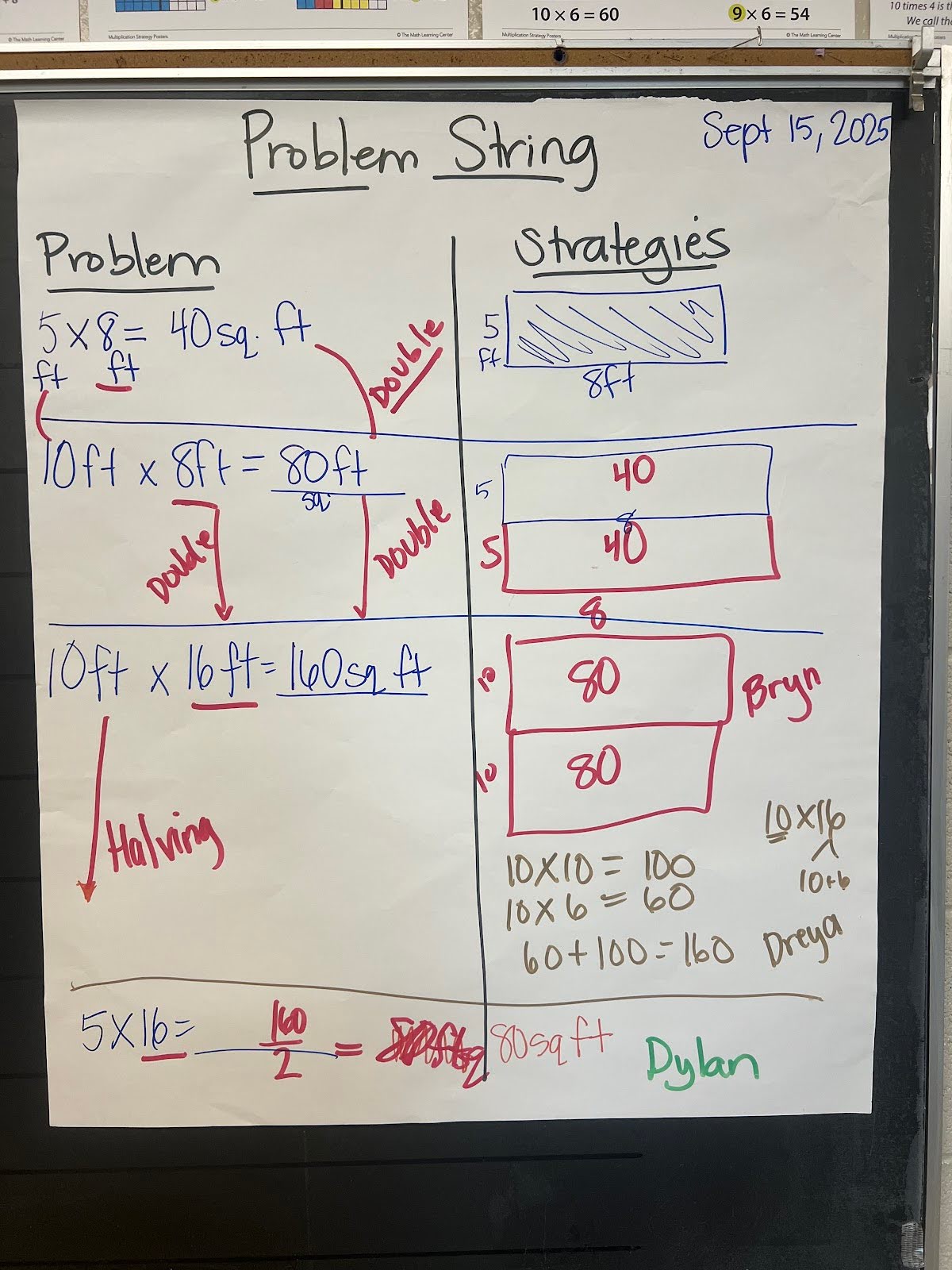
Developing student’s strategies through this Problem String connects to what Jennifer Bay-Williams describes as Explicit Strategy Instruction, using “visuals and contexts to reveal mathematical relationships that illustrate how and why strategies work.” In this Problem String from Bridges in Mathematics 2nd Edition, 4th graders used the area model to represent their thinking and the context of a garden to build relationships among each problem, showing how doubling and halving works. These explicit connections helped develop student conceptual understanding and relationships between representations.
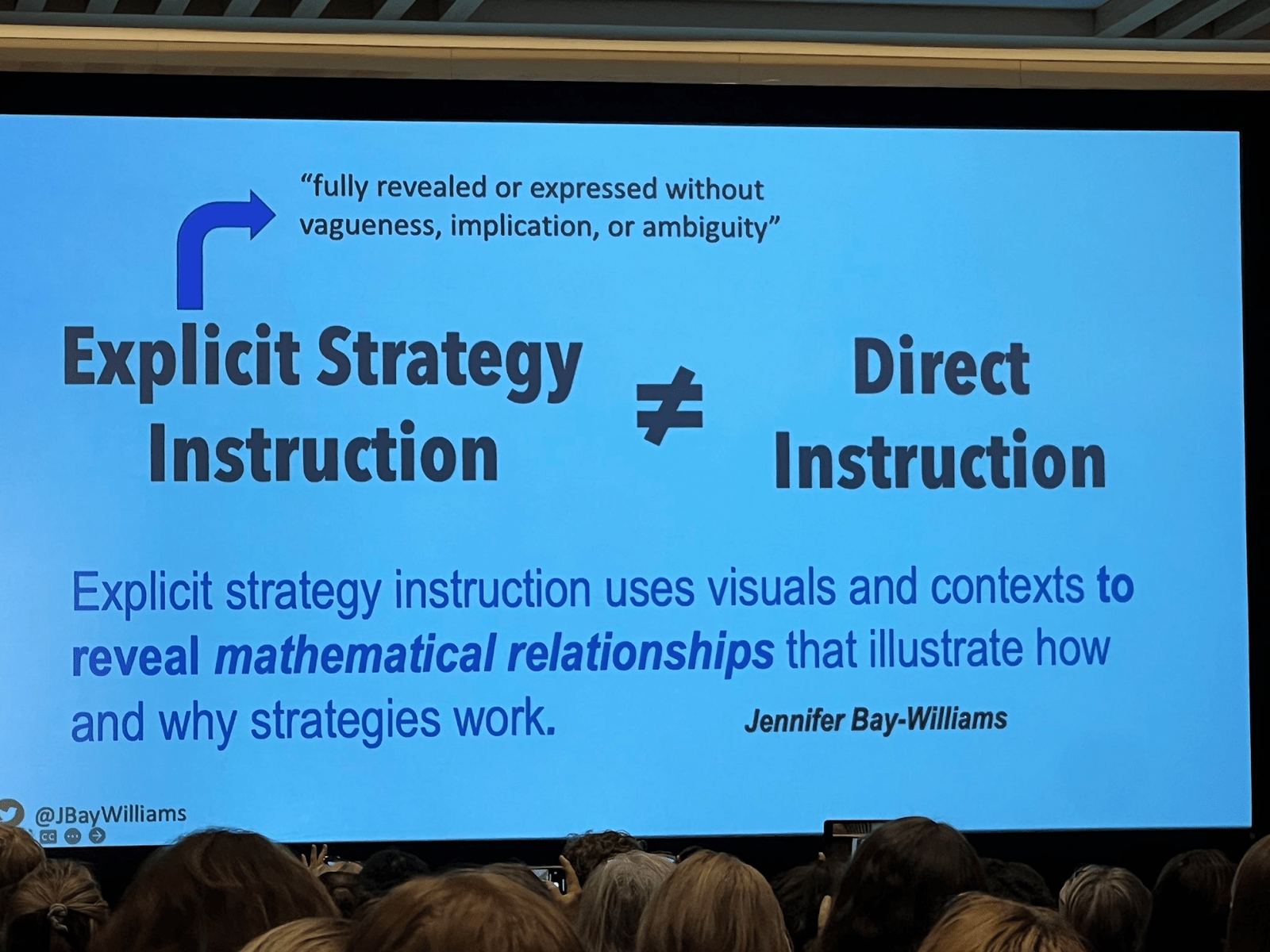
In a podcast with the Math Learning Center, Bay-Williams said, “So, what you’re trying to do is have that strategy be explicit, noticeable, visible…they’re seeing this flexibility that you can move numbers around, and you end up with the same sum. So, you’re just making that idea explicit and then helping them generalize.”
It made me then think of connections to our 2022 Minnesota Math standards;
Career, College, Community Readiness Vision Statement
- Be persistent, flexible, collaborative and creative problem solvers.
- Make connections between mathematics concepts and other disciplines, experiences outside the classroom, interests and career aspirations, as well as the connections
 amongst mathematical ideas.
 - Build conceptual understanding, thinking and reasoning in order to develop procedural fluency and flexible problem-solving strategies.

Mathematical rigor requires real-world application (context), conceptual understanding (visuals & strategies) and procedural skills and fluency.
Patterns and Relationships Strand, Number Relationships: Describe/Interpret and use quantities, relationships between and representations of quantities and number systems. Describe and relate operations. Use strategies and procedures accurately, efficiently and flexibly. Assess the reasonableness of the results.
Additional Learning: